Tuesday, April 7, 2026

Yes, there's a war somewhere, but life goes on...

The day it started, we gasped in horror. What, is this actually happening? We followed the news, drone by drone, bomb by bomb, paying attention as if the war depended on it. Schoolchildren killed. Outrage. Global grief—yes, that is still possible. Leaders killed. Anger. Third party cities attacked—third parties are not neutral. This thing is spreading. Worry. Dismay at how my country is handling this. Yours. Ours. Sea-lanes imperilled, then effectively closed.

Our cooking gas supply is going to be disrupted. Do we have enough gas in the cylinder? Our neighbours had their replacement cylinder delivered as usual. Switch to induction. Shopshopshop. There is no problem. If you book at 1145, you will get your replacement at 130. It’s the magic muhurtam for gas.

A hospital named after one of our own. A university. A research institution. Smithereens now.

Never mind but will petrol prices go up? I had planned to go on a road-trip next week but what if I cannot get petrol on the way? I heard that everything depends on petrol imports—not just motor fuel and cooking gas but pharmaceuticals and plastics and all sorts of things. Electricity. Oh god, no electricity, no motor, no water. No lift!

They are also bombing a neighbour now. Oh, that country is like a lingering itch. They bomb them like a chorus in their campaigns. It’s a wonder anyone is still left there. Including those terrorists they always say they are chasing. But wars have a long, long life. Unlike civilians they kill. Unlike homes they destroy.

There is no problem. The government says so. The government is talking to everyone on the phone everyday. There is no problem. We are the most important country in the world. Everyone listens to our wise counsel. But then, why is that country, our alter ego, our nemesis, our enemy, being called to mediate? What matters is to be more important than they are, always.

More bombs. More sabre-rattling. More speeches. More challenges. More death. So much more death. Destruction of things it took ages to build. Homes people scrimped and saved for. Bridges and roads and power plants governments took loans for. The bridal dress grandmothers and aunts embroidered. Bookshelves groaning with a lifetime’s collection, so many still unread. And still they fought, and still the wonder grew that they could hold their own as smartly and bravely as they do. (Sorry, Oliver Goldsmith!).

It’s getting really hot now. So sultry. We are planning to go to the hills. With climate change, we really need to regulate working hours for those who do manual labour in the sun. Also, between induction stoves and air-conditioners, electricity bills will be so high. Rising temperatures are a public health problem. No one will come to work. No one is coming to work because they have no gas to cook their food and eat. People are going back to their villages because they cannot cook and eat. At least there, they can use traditional fuels. It’s like COVID-19 all over again. That’s what the government is saying. Forebear, like you did during COVID-19. Why did these countries have to go to war?

“The guns spell money’s ultimate reason.” Stephen Spender got this right. Those who benefit from war are innumerable. Those who think it makes them more important. Indispensable. Those who think it enhances their power. Those who sell those lies. Those who grow in the shadow of the liars. Those who make the things people fight with, and those are innumerable, from the bullets to the aircraft to the software that powers the drones. Those who have secrets to hide behind the wanton killing of children in school and people on the run and scientists in a lab and fruit-sellers in a marker.

What are going to do in the summer holidays? Some writing. Catch that blockbuster I missed. Visit my native place (I hope it’s not inconvenient for them because of the gas situation. I already bought my tickets in January.). Read some novels. Prepare for next year. Get my house painted. Get the terrace water-proofed.

They heard the sound of planes or drones. They were too afraid to look. The windows were sealed shut anyway. The lights were out. Or, they would be out if there was power supply. Bottles of jam and jars of sweet biscuits and dry fruit were running low as tensions ran high. They did not have long to speculate. One minute they were huddling together in the middle room of their home. In the next, a bomb had hit their terrace, torn through the roof and detonated in the centre of their huddle.

10 kilos rice. 2 kilos toor dal. 2 kilos moong dal. 1 kilo each chana and urad. 500 gms tamarind—if you buy too much, there are insects in it. This humidity is like that. 1 litre cooking oil. 500 gms ghee. Get some ketchup, please. And we are out of mustard seeds, turmeric, cinnamon. Get a couple of packets of batter. And good to have frozen parathas, just in case.

Flour and sugar. Sometimes milk powder. The children have not tasted fresh milk in months. The little ones have forgotten the taste. In twenty years, they will be mocked—those who survive this—for obesity and diabetes prevalence, forgetting who made it impossible to get eggs and greens and other nutrition. Those people, they will discuss in fine dining establishments that serve the cuisines of the decimated, have no idea about nutrition.

4 weeks. 6 weeks. 8 weeks. 12 months. Time passes quietly and swiftly when you stop paying attention to the callous, vicious destruction of people’s lives. Even when villains and heroes are visible, there is too much to do in our own days to think much about them. Hard to sustain anger or concern or even a passing interest when the drama of everyday life asks so much of us. Stop already with the bad news and the endless outrage. It’s irritating. It’s a downer. It’s embarrassing that you won’t stop. You can’t do anything. I can’t do anything. Change the channel. Deal with the problems at hand.

And yet, if no one looks, no one asks, no one is angry, no one cares, then those who start wars to indulge their need to be cruel simply get away with it. The juggernaut started in one place, moved to another, then another. It is a marvel that anyone has the will or capacity to stop it. Should one join the juggernaut or to reinforce the barricades in its path? Those who can dither, confident of their innate righteousness. They have stopped counting the lives that are lost. They have stopped noticing the war. This is just what happens in the world.


Wednesday, April 1, 2026

Life-lessons from the insect world

Spring arrived in the northern hemisphere some days ago and in India, it already feels like summer. With summer, come insect and reptilian house-guests who are rarely welcome. 

If you know me, you know that I am afraid of and repulsed by almost all members of the animal kingdom, large and tiny. The tiniest challenge my wish to be a non-violent being and yes, I am ashamed of this so I pray for them to be liberated or born into a happier existence next time. None of this stops me from reflecting on the many things there are to learn from the world of insects. Here are some life-lessons insects teach me, that I have learned imperfectly. 

(And for my mistakes and anything that gives offence, I apologise in advance to anyone who feels hurt.)

Illinois, where I studied, is home to Caterpillar, which like BHEL in India, makes 'earthmoving' machinery. The insect, caterpillar, while regarded an agricultural pest, also fertilises the soil with its droppings. The lesson is: do your part, whatever it ends up being. Your contribution will surprise you! 

The grossest form of insect life that intersects with our days are arguably lice. Schoolchildren and their parents are intimate with the menace of lice infestations. I have heard that there is even a saying that lice climb seven beds, meaning they will infest seven people before they are done. In other words, 'climb every mountain' or leave no stone unturned. Do everything you can to achieve your purpose. 

Ants work very hard and they seem to work non-stop. They also work together with other ants. My instinct is to do things by myself and I am impatient with others but ants underscore an important truth--working together, steadily and in a disciplined way, we achieve more than we can alone. Teamwork is a good thing! 

"We will destroy this wall!" No one ever read a termite declaration to this effect but over a period of time, they eat into the core of the most solid structures. For all of us interested in social change, they should be an inspiration. Day by day, without measuring and obsessing over results, they smash structures and barricades decisively. 

Patience is what spiders are famous for, as the nursery rhyme hero, Insy-Winsy reminds us. Everytime its web is washed away by rain, it starts over. The spider weaves. It rains. It weaves to build again. It does not matter if what you build is washed away; it matters that you patiently pick yourself up and start over. 

Much reviled, cockroaches exemplify resilience. As a child I heard that cockroaches lived very long and were the only creatures that could survive an atomic bomb attack. I don't know if that is true but it is an impressive introduction! Life is going to throw multiple challenges at us. How do we get past each one and keep going? That is what living is about. 

We first learn the word ‘metamorphosis’ when we learn about the life-cycle of the caterpillar and the butterfly. The butterfly reminds us that metamorphosis is the journey--for us and for the world around us. Everything changes. Everything must change. Everything will change. And it will be the change towards which we work. 

Very simply, insects teach us that the scale of our effort is immaterial because everything counts if we persist together everyday, purposefully, meticulously, patiently, resiliently, untiringly and together.

Thursday, October 2, 2025

What would Gandhi do?

 Vijayadashami and Gandhi Jayanti falling on the same date must have some cosmic significance, especially for those of us who would like to be useful in the world!

Coincidentally, I finished reading Krishna Kumar's wonderful novel, "Thank you, Gandhi" yesterday. As a person who aspires to be a peace educator, Professor Krishna Kumar is an educationist whose writing and views I have long sought out. This book is a departure from what I have read of his work and it was a wonderful surprise.

Assailed with all the disappointments and anxieties engendered by the world we now live in, he does not rant. Artfully, he uses fiction to say the things many of us would like to say. The device he uses is so simple that reviewers have assumes he is writing about himself and his friend--and perhaps this is the case--but that is arguably just their assumption. 

The protagonist is left a series of files written by his childhood friend who has died, asking that he complete this book project. The notes themselves are reflections on a changing India written by a bureaucrat who has served over decades of rapid change. This friend sees the change, as many of us do, as being a deterioration in values and political culture, barely mitigated by an even-handed improvement in quality of life. He reads about Gandhi and he reads Gandhi and he converses with Gandhi to try and make sense of this world. 

The Union Carbide factory leak looms large because the friend was an MP IAS officer and served in Bhopal in the relief work at the time. But his notes also mention the epidemics of caste-based killings, gang-rapes and lynchings that go unheeded. 

I found it very difficult to read at a stretch the first 40-50 pages, which are the protagonist's contextual account. We might say the prose is triggering; more precisely, it was actually both gut-wrenching and a relief to find that someone had written down words that we now find ever-harder to utter. We are surrounded by sycophantic commentary, self-congratulatory self-promotion and lies. No one seems to remember history. Hardly anyone is able to ask questions. Some who do are punished for it. Others are barely heard. It was so hard to see all the things that I feel written down and printed. Even as I read, I felt fear for the author. 

But the use of fiction blunts the sharp edge just enough as the book oscillates gently between reminiscence, relatively distant history (which actually is not that remote, given the public health impact of the Bhopal gas leak lingers) and biting comment on our times. 

The discussion of Gandhi's ideas, Gandhi's relevance and the conversations with Gandhi take forward in some ways what my cousin Niranjan Ramakrishnan wrote about in his book, "Reading Gandhi in the 21st Century" and what Rajmohan Gandhi writes about, especially in "Why Gandhi Matters." For most of us who grew up during or in the shadow of the Gandhi-Nehru era, this moment is especially baffling and it is challenging to find ways to be and act that feel true. This part of the book spoke to me less than the rest and I think it is because there were so many parallel conversations underway in my head. Perhaps I will come back to this at another time. 

Page 37

The book works the way I have always imagined that many of Professor Krishna Kumar's classes do--starting with the idea of the journey he wants to facilitate, raising questions, reflecting honestly, enabling a variety of perspectives to be explored and articulated and not necessarily with a pat conclusion. Learning is a journey. Political action is a journey. And both can be done creatively. I will just close by saying, "Thank you for writing this book!" 


Sunday, September 21, 2025

Dialogue is an all-weather bridge

I am mirroring here a post that has been brewing since May 20205 and that I just posted on another blog.

***

Impossible divide, imperative dialogue

This piece originated in online conversations with friends on both sides of the India-Pakistan border in May 2025. It took me months to write it—because it was personal, because it was challenging, because of the demands of everyday life. It is still not everything I would want it to be. Embracing its imperfections, I am posting it today as a reflection and a prayer for peace on International Day of Peace.

***

Months after hostilities were paused/ ceased, India and Pakistan remain tiptoed on a cliff’s edge. There is no peace.

There is no peace despite decades of official and non-official, public and back-channel, attempts to talk. Every single time we have got the most well-meaning Indians and Pakistanis into a room, over a few days of discussion, familiar lines appear between us. For Pakistanis, this line reads “Kashmir” and for Indians, it reads “terrorism.”

The Kashmir line

Pakistan’s initial national imagining was based on a vision that included Kashmir and the ideology behind this was the “Two Nation Theory”—an understanding of social relations in the region that saw Hindus and Muslims as two nations rather than religious communities. As each nation seeks statehood so that their peoples might be sovereign and self-governing, so must Hindus and Muslims. The Indian freedom movement—dominated by (upper class, upper caste) Hindus—was seen as essentially seeking a Hindu state, and the corollary was that Muslims—that is, Muslim-majority regions—must have their own. (This was a view shared by the Dravidian movement, incidentally, which has since found a way to live with and within the Indian state.)

For Indians, Muslim-majority Kashmir was made out to exemplify the refutation of the “Two Nation Theory.” If the Muslims of Kashmir were voting regularly and settling in other parts of India, they were said to be voting with their feet to be a part of the secular Indian state—meeting plebiscitary conditions. The flaw with this logic was of course, that successive elections in Kashmir were allegedly rigged and elected governments were overthrown by the central government through constitutional interventions. This is often listed as the cause for the insurgent movements in Kashmir since 1989. Furthermore, the abrogation of Article 370 in 2019 removed any semblance of regional autonomy, forcing the integration of a special status accession into the Indian/Hindu mainstream. 

Many now recognise that there are three points of view that should be represented at any Kashmiri peace table—Indian, Pakistani and most essentially, Kashmiri— but this is still far from a mainstream position. In Pakistan, the assumption is that the Pakistani and Kashmiri positions are the same, and in India, it is that the Kashmiri position must be subsumed within an Indian one. For Pakistan, there is only one negotiation on Kashmir, and that is a bilateral, inter-state negotiation. For India, there is only one negotiation and that is an internal negotiation which, depending on your politics, is either a multi-stakeholder dialogue or an internal security problem. What Kashmiris think is rarely considered, and if it is brought up, the question becomes: who will legitimately speak for (which) Kashmiris.

In almost eight decades, we have not built a road between these perspectives on “Kashmir.”

The terrorism line

For Indians, Kashmir is not the main issue between India and Pakistan. The main issue is “cross-border terrorism.” In the Home Ministry’s annual report to Parliament, four types of internal security threats are described, each as confined to one geographic region. One of these is “cross-border terrorism in Kashmir.”

For decades, the government of India has squarely accused the Pakistani government, specifically the Army and intelligence services, of fuelling, funding, training and supporting logistically, militant operations in Kashmir. In a political culture where foreign policy is securitised, information is relatively scarce and any discussions are opaque. Furthermore, the public is inclined to believe the government. After the 2008 Mumbai attack which played out live on television screens, this inclination has taken further root. The government of that time chose the diplomatic route, presenting dossiers of evidence to the Pakistani side. In multiple attacks since then, it has become easier for the Indian public to believe in the Pakistani ‘hand.’ In April-May 2025, it was not just hawkish politicians who were speaking about Pakistani support for cross-border infiltration and violent activity by militants, it was also those otherwise critical of Indian government policy and actions.

Like their Indian counterparts, Pakistani leaders make belligerent statements from time to time, primarily intended for a domestic audience, and these statements reinforce the Indian public’s faith in Indian government statements. The Indian government contends that as long as Pakistan supports cross-border terror, it is not possible to hold any talks. (In any case, in the Indian view, Pakistan has no locus standi on the question of Kashmir which it insists is an internal problem.)

Pakistanis point out, rightly, that they have also been victims of terrorist attacks, asking, “How can you accuse us of supporting terrorists when they are also attacking us?” This is correct. It is true that since the Soviet invasion of Afghanistan in 1979, Pakistanis have experienced countless small and large attacks by armed groups. Pakistan has also lost its leaders to violence by militant groups. In addition, people in their border areas have been caught in the cross-fire of others’ wars with drone attacks in civilian areas. It is true that the Pakistani public has been a victim, as much as the Indian public has.

However, the Indian accusation pertains not to the people of Pakistan but to the Pakistani military. Even if the civilian rulers of Pakistan are unaware and unable to stop them, this accusation makes them complicit. Given that neither ordinary Pakistanis nor ordinary Indians are privy to “proof” and we both live in a time of obfuscation and disinformation, we are left to choose, purely emotionally, what we want to believe. Or, at best, with several questions and no hope of finding definitive answers.

I struggle with this question of terrorism for many reasons. Even a lifetime of scepticism about government claims leaves me wondering about these accusations. Can there be smoke without fire, one wonders? The accusations of interference through support for insurgents are made on both sides—Pakistanis supporting Kashmiri groups (or now, supporting groups that are affiliated to transnational networks but operating in Kashmir and elsewhere in India) and Indians supporting Baloch groups.

All states survive through the use not just of force within and without, but a host of covert activities—espionage, surveillance, political interference—that each considers its legitimate right to security. Transparency is inimical to the success of these activities so we know but we never have proof. Those who challenge the idea that such activities are essential are dismissed as naïve and those who demand accountability for them are branded treacherous. Citizens learn to survive through silence and therefore, tacit consent for such undertakings. Thickening smoke and smouldering fire obscure thinking.

Can we cross these lines to sit and talk?

For peace activists, this is a very challenging situation.

Talking—via official and unofficial talks, through confidence-building dialogue—is an expression of faith. You cannot speak with someone you demonise (and until you speak with them, you will demonise them!). Statements by Pakistani civilian and military leaders (such as this one and this one) that anticipate and affirm a long-term “enmity” with India reinforce Indian accusations. But the rhetoric of Indian leaders too, is now intemperate—sometimes in the tone of streetside gang war–and my friends on the other side of the border must have exactly the same questions.

Every time the two governments descend into the cesspit of mutual vilification, it is harder for ordinary people to make the simple point that they would like to hear the other side’s story. In informal gatherings—such as university campuses outside the region or third-party convenings on other matters—Indians and Pakistanis may bond over a host of questions and they may even have one-on-one conversations that cross these lines. However, the official vilification works as a taboo, imposing a cost on those who will publicly push it aside and ask for talks. For most, the prospect of being accused of betraying our countries simply by asking questions or seeking to learn is an impossible cost to bear.

Working on peace means you cannot work on partial truths. Even if Pakistani agencies are supporting violent activities across the border in India, that is one part of the truth. There is also the Indian state’s culpability in creating conditions that facilitate such activity, most notably through rigged elections and interference in the functioning of governments. Making Kashmir a symbol of something in the idea of India has made Kashmiris mere instruments of geopolitics. Dialogue depends on listening to and acknowledging all these truths which must coexist in our heads and collective conscience, even as they coexist in reality.

But the absence of transparency in the security sector means that on both sides, we are dependent on a state that says “Trust us” but we really can’t. Whose information will we then trust? Who is telling us the truth? What is truth and what is the truth in this situation and what is each person’s truth? Whose truth matters more? Dialogue for peace involves finding a way through all this, but that is easier said than done.

The murky adage, “One man’s terrorist is another man’s freedom fighter,” lends to violence a romantic and hopeful glow it does not deserve. When Indians raise the question of cross-border terrorism, the answer cannot be, “But they are fighting for freedom, do you not see that?” It has to be, “This method is wrong and whoever is endorsing and supporting it, is wrong too.” Yes, a non-violent fight against a militarised state seems hopeless, but attacks like Pahalgam (and the Indian Parliament attack in 2001, Sarojini Nagar bombing in 2005 and the 26/11 Mumbai attack, to list a few) just diminish the legitimacy of whatever cause is being espoused. The suspicion that they are being backed by a state makes the cause too seem spurious. I would even say it obfuscates the original cause almost entirely.

When I raise the issue of arbitrary violence, regardless of the perpetrator, such violence is wrong. It cannot be perceived as correct in one circumstance and as wrong in another. When the Indian state absolves the lynching of minority citizens by ignoring it and focusing attention on irrelevant detail (“were they really eating beef?” or “what is the real meaning of this social media post?”), it is also wrong. When the state enables violence against the citizens of another country, it is wrong. The wrongness of violence is the one thing that is crystal clear and unchanging.

Dialogue despite the dividing lines

To reach this clarity, it is important that we are able to sit and listen fully and openly to each other’s accusations. We need to be able to sit and listen to each other without flinching and jumping up defensively. It is not necessary to counter each statement with contestation (“you are wrong”) or contingency (“but…”). Just as we place our weapons outside the door of the negotiating room, we must place all our issues—offensive, bleeding, spurious, inflammatory, as they may seem to us—on the table. That airing is a prerequisite for peace.

This is why dialogue, at multiple levels, is important. We cannot stop talking, no matter what. And if symbolically, official dialogue stops, it is imperative that other tracks continue to communicate. The maintenance of bridges becomes even more critical in bad weather.

Two kinds of behaviour further challenge the process of dialogue. The first is the pressure to perform. There are invisible models of how to be—what a true peace-lover would say, or the correct line for a “progressive,” or expressions of genuine patriotism—that lurk within and without us, making it hard for us to open our hearts and minds to learn and reflect and grow. Conformity and performance are easy and we make it hard for each other to remain true to the messiness of inner transformation which is the hallmark of peace-making. The work of peace is the work of inner transformation leading to outer change. It is the work of the satyagrahi—a person whose integrity and values are strong, who is not easily swayed by emotion or passion and who has the discipline to do what is right.

The second is the insistence on perfect consonance. When the expectation in a room is that everyone will agree to exactly the same things, dialogue is doomed. It used to be the habit that when one bought or stitched clothes for a growing child, one added room for alterations that would accommodate their growth. Similarly, peace processes, both official and non-official, must build in rooms for disagreement and dissent so that one departure, one edit suggestion or one question cannot derail the broader work. Language matters but semantics must not sideline what we need to say to each other. We must embrace the idea that talking peace takes time and this is because we need to be willing to pause, listen, reflect and either shift our “text” or find a space for the difference of opinion without stopping the process altogether. We are building peace, not a house of cards.

I want to talk peace. All summer, I struggled with this practical, political question–how can we bring Kashmir and cross-border terrorism into one dialogue, where raising one question is not to deny the validity of the other concern. I want a cessation of the violence that only hurts the innocent. I dream of a time when militarised borders will not divide peoples who share so much. I wonder what it means to celebrate our nation-state collectives, if we are not free from this legacy of carefully nurtured mutual enmity, so that we can actually nurture our own talents and enjoy the rewards of our daily labour, without fear or want. To be free, truly free, we must open our hearts and minds and speak freely with each other. We must be at peace.

Wednesday, May 7, 2025

Finding Words for Peace in a Season of War

 And so it has happened.

***

The terrorist attack targeting tourists in Pahalgam lifted the curtain on an eager chorus ready with war cries. Night after night in television studios and on location, they told us about the perfidy of the other side and whipped themselves into a vengeful frenzy, hoping that we would join them. They shouted so every household in the nation could hear them.

Beyond them, an enigmatic government escalated diplomatic measures, such as suspending the Indus Waters Treaty and cancelling visas, and spoke about giving the armed forces operational freedom.

***

Those of us that have spent our lives talking about peace and working towards it, one small task at a time, have watched in horror. We have preached to the choir of our friends and associates—because that is the extent of our reach. We have sat with our words because we have nowhere to put them. Our voices reach no one. We have reflected on how much agency and voice we have lost in the last decade or so. The sense of futility has equalled the horror felt as war-mongering voices have become louder.

***

On April 30, 2025, I wrote on Facebook:

Terror, or indeed any violence, by any actor, state or non-state, is wrong and its consequences are always tragic. The tragedy begins with its immediate victims, lingers in the vengeful anger we feed as we perform outrage and finally, decimates our own humanity--our ability to feel for others and our ability to think.

We can close the door on this by pausing. Feel deeply, but do not equate grief and solidarity with vengeance. Perform grief with care--for those directly hurt, for those indirectly affected. Perform care with thoughtfulness--that considers consequences, that considers who will pay the cost of what you demand, that considers the means more important than the ends.

Responding to violence with violence is always wrong. It always feels like it's now too late for pause, for patience or for dialogue, but it never is. When the chorus mounts, peace seems to be the talk of the weak and witless. But it is when the crisis is most acute that it is time to breathe. It is time to maintain balance. Rising vengefulness is a sign that one is becoming the other, or more truthfully, a sign that one IS the other.

At a time when I feel less confident in my agency as a citizen, I am writing this because my silence would be my failure.

It is Akshaya Tritiyai and I wish you peace. May peace abound--in our thoughts, in our lives and in the world!

***

Today, Indian cities will carry out civil defence drills with air raid sirens and sheltering. For people my age and older, this is reminiscent immediately of 1971.

We shifted school buildings, had two drills a day, ducked under tables, had blackout paper on our windows.

One evening, my father stepped out just before the air raid signal went out. He was on the road when there was a fly-by of Pakistani aircraft. We ran from our flat to our neighbours’ flat to shelter together with them—my great-grandmother, my cousin, my mother, my 1-year-old sister and I. My paternal grandmother came to stay in the middle of the fortnight long war and told us stories to keep us occupied during the blackout.

But nothing ever removed for me the memory of loss. I went to a school where students and teachers alike came from military households. Twice or thrice a day, we would hear announcements about fathers and husbands who had fallen. Those moments of silence remain with me today. They keep me here, writing, so there is no silence about war.

***

These disjointed pieces of writing are what I can manage today, like stuffing paper into the cracks in a crumbling wall, hoping to keep the wind and water out. Not doing even this is worse than its pointlessness.

***

When civilians glorify the military and the sacrifices of those who serve, they also do them a disservice. There is always glory in doing what you have assumed as your duty and there is satisfaction in doing what you think is right. However, when those of us who do not serve, stop at vacuous praise and romanticising militarism, we also abdicate our duty as the people they defend. It is their job to defend and protect. It is our job to protect them by practising restraint, by resisting the temptation to join a vengeful chorus, by holding our leaders accountable for trying every measure and by making sure, their blood is not shed in order to satisfy our egos. The military’s job is to protect us and it is our job to protect them from our own vengeful bloodlust or our leaders’ egotistical vision. Military options should be the last option. The very last option.

In security decision-making, there is little transparency and therefore, there is no accountability. Are we sure that every other option has been exercised?

Most important, have we insisted that every other option has been tried?

***

The problem with terrorism is that it tempts you to insist that only a violent response will satisfy. The truth is we have no patience for the alternative—which short-term may be to press on diplomatically and long-term to understand the appeal it holds. We are also defenceless against those who will goad us into demanding violent reprisal. That chorus is so loud that it sounds like a universal demand. For governments, a violent response is an easy simulation of action—someone else carries it out and pays and you get to say you did this. But nothing really changes.

The fog of war distorts our knowledge about what is going on. Who struck whom? Did they actually hit their targets? Did they hit something else? Were they felled or did they make it back? Very quickly we do not know. And we do not ask because asking is not allowed in times of war (and let’s face it, now also in times of no-war).

The fog of war also obfuscates our real reasons and agendas. Everywhere.

The real impact of this surreal time is on people. Soldiers who die. Families on the border. Families of soldiers. What looks glorious and glamorous at a safe distance is actually a lifetime of grief (mixed with pride for military families), displacement, disruption, disability and a struggle for those at the epicentre.

I am not belittling this sacrifice. I am questioning why we let it happen if there is even a chance it could be avoided.

***

Even when there is no war, life in the border areas is war-like. Over the years, we have seen and read countless reports of schoolchildren playing cricket and landing on mines. We have heard about the military presence in small towns, taking over schools or subjecting people to searches. And yes, there is always a justification for all this.

But really, honestly, truly, is there?

***

I live two lives that are apparently incompatible.

I am a peacenik, peace activist (whatever activist means), pacifist, peace educator—one of those people—you pick your word. In a small measure, this is because even in everyday life, I hate shouting and confrontation. Everyone should just get along and leave me alone. In a large measure, this is because I cannot separate violence and conflict and war from their dehumanising and cruel consequences. This is what is foremost in my eyes. This is who I have always been.

I am also a security studies scholar. This means my professional credibility depends on being and sounding like a peer group of (mostly) men--some of them my friends--who sit in suits, know everything (and everyone) and having spoken of all they know, are convinced of the rationale for war. Decisive action, forceful responses, cool reasoning, realist thinking—all of which add up to understanding and justifying the exercise of coercive power. It takes a generous and confident display of testosterone-driven aggression. 

I came to this field because I wanted to be a more effective advocate for peace. I respect my colleagues for how much they know and for their integrity in speaking their minds. But their conclusions have never become my truth.

***

There is a gender dimension to war. It should be obvious but I will state the obvious here.

Those who were shot in Pahalgam were men. Those who shot them were men. Those who shouted in the TV studios were mostly men. Those who sat in those televised but secret official meetings were mostly men. Those whose op-eds got media space were mostly men spelling out the arguments for a ‘forceful response’ and the very few voices I read calling for restraint were mostly those of women. Those who led the diplomatic effort and pronounced it successful (but still not successful enough to prevent war) were mostly men. Those soldiers who will die in the fighting between the two countries will mostly be men.

Those who were bereaved in Pahalgam were women. Those who are displaced or left behind by war are mostly women and children. Those who are rarely seen as experts or asked about what they think are these women who must live and rebuild their lives after men have decided.

Those who are invisible in all of this are sexual minorities and non-binary persons. They don’t even exist and therefore, need neither consideration nor voice nor protection.

***

On another note, in every ‘ordinary person’ interview on TV, that person has asked for peace and normalcy. Returning to the studio, this has strangely transformed into a rationale for calling for war. Anchors have pranced about exultantly and triumphantly telling us about how we have diminished our neighbour and frightened them and created anxiety.

***

It is in times of crisis that one must stop and breathe and wait. This is the advice one gets for one’s personal life. Don’t make big decisions in times of trauma. This should apply even more to nation-states because the stakes are so much higher. But it does not.

***

Air strikes have already happened and spin has already obfuscated fact. This writing is too little, too late and I know that hardly anyone will read it. But write, I must. When we are all dust and ashes, and perhaps, atomic waste, somewhere in the universe, someone will know—she did what she knew. 

Monday, January 27, 2025

Promises kept: Celebrating the Right to Information

Yesterday was Republic Day, observed in the shadow of a contentious politics around the Constitution it is supposed to celebrate. Many things have been written about this and in this piece, I want to write about the Right to Information which is one of the rare instances in independent India's history where people have wrested a right from the state and established it in law. RTI is truly the republic (res-entity-publica-of the people) in action--both in its origin story and in how people have used the right. 

Origins

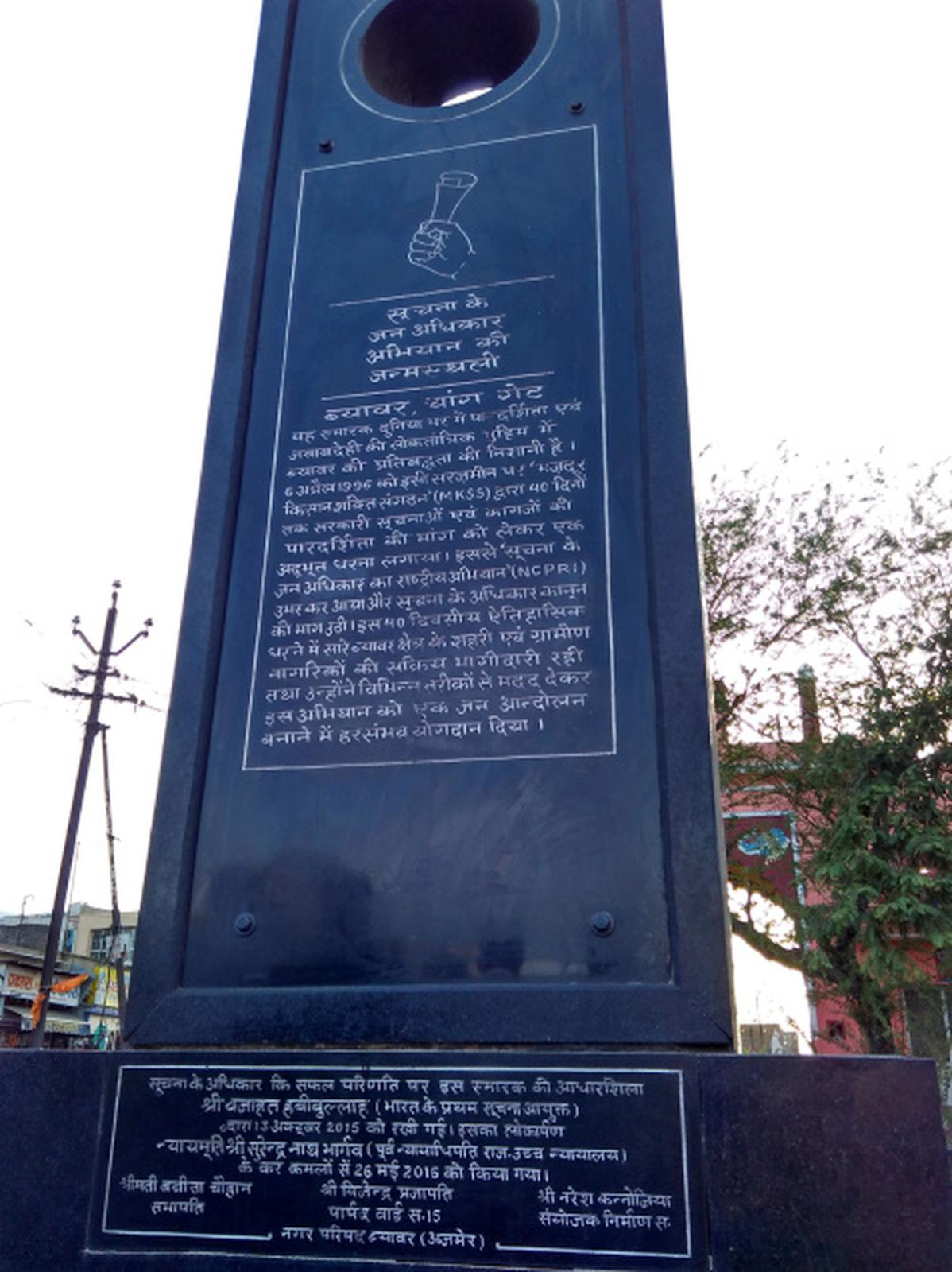
How the campaign for a right to information got started is a story all of us know and rarely remember. Briefly, in 1996, the Mazdoor Kisan Shakti Sangathan (MKSS) organised a dharna in Beawar, Rajasthan, which went on for 40 days. The people of Beawar supported and sustained the dharna and other organisations joined. The National Campaign for the People's Right to Information was formed at this dharna. 

In retrospect, it is stunning how quickly states first and then the centre adopted laws to institutionalise the right to information. According to the MKSS website, "The NCPRI, has been able to lobby both in the States and at the Centre, and today there are Right to Information Laws have been enacted in the States of Tamil Nadu (1997), Goa (1997), Madhya Pradesh (1998), Rajasthan (2000), Maharashtra (2000), and Karnataka (2000), Delhi (2001), Jammu and Kashmir (2003) and Assam (2003). Citizens pressure from across the country helped bring forth a greatly improved National Bill which was passed by Parliament in 2005, replacing the much weaker Freedom of Information Act passed in 2003. The Right to Information Act (2005) came into effect across the country in October 2005."

The Right to Information

"An Act to provide for setting out the practical regime of right to information for citizens to secure access to information under the control of public authorities, in order to promote transparency and accountability in the workiiig of every public authority, the constitution of a Central Information Commission and State Information Commissions and for matters connected therewith or incidental thereto.

WHEREAS the Constitution of India has established democratic Republic;

AND WHEREAS democracy requires an informed citizenly and transparency of information which are vital to its functioning and also to contain colTuption and to hold Governments are their instrumentalities accountable to the governed;

AND WHEREAS revelation of information in actual practice is likely to conflict with other public interests including efficient operations of the Governments, optimum use of limited fiscal resources and infonnation;

AND WHEREAS it is necessary to harmonise these conflicting interests while preserving the paramountcy of the democratic ideal;

Now, THEREFORE, it is expendient to provide for fumishing certain information to citizens who desire to have it."

The preamble to the Right to Information (2005) Act firmly links the right to democracy, transparency and accountability. It also acknowledges, and therefore, enshrines, limitations on this right in the same text, opening the door to a host of legislative and everyday curbs to its exercise. Like all other rights, the right to information is therefore something that we need to protect through a constant vigilance.

Today, the Central Information Commission and State Information Commissions represent the existence of the act. More importantly, every government department has an RTI desk. There is an RTI portal for the central government and also for each state. But what is useful for the ordinary citizen is that we can also file RTIs via email or through the post office. The portals provide a format but one can also simply write one's request in one's words and the government cannot say, "You did not write the correct words or format." The fee is also minimal.

Exercising the right to information

Ease of use has made the RTI a popular instrument. Satark Nagarik Sangathan reported last year that between July 1, 2023 to June 30, 2024, 231417 RTI petitions were filed across all the Information Commissions. 

People use the RTI to seek information about personal matters (where is my application stuck?) or local concerns (what happened to the road repair that was started 3 months ago and abandoned?). At Prajnya, in our short history, we have used RTI petitions a few times in various ways and with varying degrees of success.

  1. Our first petition was filed on November 25, 2009, marking the opening of our 16 Days Campaign against Gender Violence that year. The petition, as I recall, asked a few questions about usage of fund allocations for public safety. It was batted about a few departments and received no reply.
  2. In 2016, we tried again. This time, a focused petition asking about the formation of Local Committees (mandated by the workplace sexual harassment law) was sent on to District Collectors. Responses varied. Some phoned to ask exactly what we meant. Some sent us their office Internal Committee details. We followed up with a second set of petitions, this time directly addressed to District Collectors in Tamil Nadu.We were able to compile this information into a publicly accessible spreadsheet. We intended to repeat this exercise in 2024 but it floundered for our own reasons. 
  3. Early in 2024, we were part of an RTI effort by women's organisations to seek an update on Tamil Nadu's Women's Policy. We had seen and sent feedback on a draft but the final version had not appeared over a year later. This met with a quick response saying the Policy was almost ready and so it was.
Colleagues in the social sector say they have used the RTI extensively and effectively. This is great news because for ordinary people, access to the administration still retains the quality of a colonial durbar. The gatekeeping is extraordinarily efficient and you will rarely get appointments. You have to sit and wait hours, despite the appointment. After all that, you enter the office, tired and suitably chastened for having the temerity to seek information or assistance and receive a short hearing--courteous if you are lucky--before being dismissed. Most of the time you have to visit multiple times. 

In 18 years, if I had had the patience to visit the darbar regularly, my organisation might have had a higher profile in official circles. As it is, we were content to email relevant information (such as reports) and take our chances. After all, all that patience and deference were still no guarantee that someone would read what we handed them.

In such an administrative culture, where despite the constitutional mandate and the rhetoric, a relationship of patronage persists between the administration as raja and all of us as praja, the RTI is an extraordinarily powerful tool. 

You can seek data--how much money, where is it used, who sits on the Local Committee, how many times has it met. You can ask for updates--what happened to your draft policy? You can nudge officials into doing things they may have forgotten about or not quite understood--this was our experience with the implementation of the Sexual Harassment of Women at Workplace (Prevention, Prohibition and Redressal) Act, 2013 at the district level. It seemed that our RTI petition had reminded some that identifying a nodal officer and setting up a Local Committee was part of their work. 

As I was researching this blogpost, I mistyped RTI as rit, and generated information on writ petitions. I would say this is no mistake. The right to information is as powerful a tool as a writ petition for safeguarding all our other rights. It is also much cheaper and easier to exercise--we don't need lawyers, we don't need courts, we don't need anything but a simple letter and a small fee (Rs. 10/-). 

Celebrating the right, commemmorating the movement

Source: The Hindu
In 2016, the April-May 1996 dharna for the right to information was marked with a memorial at Chang Gate, Beawar. In 2024, the foundation stone was laid for an RTI museum--a "living museum," in Nikhil Dey's words--which will showcase history, archive people's experiences with RTI, teach people how to file petitions--in short, be a place where people can learn, do, teach and share. 

We associate museums with things so old we can barely remember them--and in India, to be honest, rarely care about. But an RTI museum, a place of seeing and doing, is an important project, in my view.

First of all, the right to information is integral to the right to life. Think of COVID. All that we did not know and do not know about help we could get or how we could stay safe led to so much suffering. And we still don't know where donation money went, how many people were sick, how many died. Opaque governance protects governments, not citizens. 

Second, the right to information is integral to our right to freedom. We live in a time where any kind of dissent and free speech are at best trolled and at worst, punished with incarceration on trumped up charges. We have the right to know--to fact check, to ask questions, to demand accountability. We have the right to a two-way engagement with government. In democratic India, we are citizens, not subjects, and those in government are our equals. The right to information is an assertion of that equality. 

Third, the movement for a right to information stands out in the history of people's movements because it was effective. As flawed as the various RTI laws may be and as imperfect as its implementation, the fact that a right to information is part of our democratic discourse (and emulated by others) is precious. That we won it, against a global tide of restraints on the freedom of expression and civil society, is something to celebrate and always remember. 

Fourth, new laws, new regulations, new rules incrementally limit our right to ask. If we recall the conflict noted by the RTI Act preamble, the state is now tilting the balance back in favour of secrecy. Where our political culture is herding us into habits of unquestioning obedience and unthinking credulity, a space where we can learn about questioning and challenging is very important. Even using the language of 'duty', where do we get to learn our 'duties' as citizens--to insist on transparency and demand accountability, to go out and vote freely from a slate of candidates who can contest fairly in a level playing field? A living RTI museum, appropriately a project of the School for Democracy, founded by the MKSS, would be such a place. 

I preach citizenship all the time--be a good citizen, be an active citizen. And democracy is as important to me as clean air--I need both and indeed, democracy may be a prerequisite of clean air as we hold our governments accountable for climate justice. I am therefore, happy to support the RTI Museum project in whatever small way I can. If you would like to learn more about the project, this post has several useful links. 

If you would like to support the project financially, you can contribute via this link. The RTI Museum is NOT seeking government or corporate/CSR support. The idea is that the RTI, the right belong to all of us, each of us, and so will this museum So, it will be up to us to imagine the museum, take ownership and to make it a reality. 

Friday, July 19, 2024

That myriad-faceted diamond

Grief. 

When my father died, someone very wise said to me that grief was like a diamond. You would grieve acutely and then the feeling would mellow. Until suddenly the light would catch on another facet of your loss and you would start afresh to feel bereft. 

When one witnesses a slow death, one grieves in anticipation. That grief is mixed with helplessness and guilt. Mostly guilt about helplessness. You cannot stop this. Or could you? Is this happening because of you? Your negligence? Your incompetence? It's horrible and even as that potent combination combusts inside your being, you cannot share it with anyone. It is not the same for anyone else. You are grieving and you are alone. 

Still, humans are resilient and wired to drag and keep moving from one task to the next, one day to the next. 

Until something reminds you of one of the reasons for your grief. Why does this matter so much to me that I am this sad about its loss, despite all that I know about life and loss, about working in the moment? And then, you start over. 

No matter how many words you spill, you are alone in your grief. Desolate. Bereft. Sad. Alone. 

Thursday, June 27, 2024

The Pause Button


Some days, life just cries out for a pause button. Or is the pause button that cries out to one? 

Either way, you know you simply have to walk away from all of it--at least for a while, if not forever. The work. The responsibility. The thinking. The planning. The organising. The worrying. The stretching of the brain to accommodate all requests. 

The last straw is loaded. It is just too much. It is time to shed whatever one can. 

But if one cannot, one searches frantically for the pause button, hoping that somehow the whole world gets the message and stops the relentless assault, knowing it doesn't, hoping that one simply ceases to notice, at least for a while... 


Saturday, June 22, 2024

The Magic Hour


5:16 a.m. and it is  still pitch dark outside. I have been up for an hour, attempting to go back to sleep. 

This is the magic hour when sleep is most delicious and waking up makes for a day of endless possibilities. What to choose? On days when I have to get going, I know sleep is the better choice. On holidays, I am up bright and early, my brain cranking up that long list of tasks that make it impossible to return to sleep. 

And there are the many discomforts that come with age. I won't listen them but at either end of the night, they will not let you sleep. 

So, early mornings. Dark. Quiet. Cooler than the rest of the day. Secret, because no one knows you are awake. A magic time that is all yours. 

What will you make of this magic? 

Friday, June 21, 2024

Recoleta's Atlas

July 14, 2024, Buenos Aires. Photo credit: Swarna Rajagopalan

Outside Buenos Aires' famous Recoleta cemetary is this amazing, old gum tree. Beneath, you are surprised to see someone carrying, dragging it, a little bent under its great weight. 'Recoleta's Atlas' was sculpted by Joaquín Arbiza Brianza from over 3000 car parts, welded together. 

Sometimes, we are each Recoleta's Atlas, carrying the world on our shoulders, trying to drag a much larger tree, deeply rooted to the ground. 

Wednesday, June 19, 2024

Polyglot Power

I like language. I like words. I like written words better than spoken words. I also love silence but my love for language remains. 

This was not always so. 

Tamil is my native language. Growing up in Bombay, I spoke it in a stilted way and although my mother taught me the alphabet, remain largely illiterate. 

In school, we started Marathi first. I never heard anyone speak Marathi and this was a whole two years before Doordarshan's Bombay station was launched so I had no exposure to Marathi. Suddenly, one day, we were asking Aai to look at the lotus and the next we were reciting Manimau. For the most part, I was swimming blind. That cluelessness remained all the six years I studied Marathi in school, never quite catching up. 

Hindi followed and was somewhat easier thanks to cinema. Still, as a native Tamil speaker, I was self-conscious about aspirated sounds and gendered nouns. I think this remains throughout our lives. With my friends, I did three levels of the Rashtrabhasha exams and I will say that despite my self-consciousness and my deficiencies, the coursework of the third exam gave me an appreciation of Hindi that I had not considered. 

I started learning French before Std VIII. I wanted to be a diplomat and French was a diplomatic language, I had heard. It was also better taught, taking nothing for granted, so finally, I did well. I learned French for many years in school, college and at the Alliance Francaise. I was once decent at it and am now rusty, but I treasure my ability to read in French and occasionally surprise someone with a word or two! 

You notice I have not mentioned English. Even in my Tamil speaking home, everyone read in English. There were English books and magazines everywhere. English was just there, taken for granted. Everyone read in my family so book recommendations (and very rarely books) got handed down. 

The other language in the shadow of my family's history was Burmese. An entire branch had done their schooling in Rangoon before the Japanese invasion. They were fluent and one branch famously could only do multiplication in Burmese. I tried to learn phrases from my uncle and though they were pedestrian, I liked to think it was our secret language. 

I may not have excelled at language learning, nor pursued literature as my field of work. However, what I treasure, even with the little bit of every language I have learned is the way they allow me entry into other cultural universes and the way they enrich each other. 

On short visits, I like to learn how to say 'Thank you' in the local language. Nothing connects you to another human than your brave and sincere if disastrous effort to speak with them in their language. I would say even that our mistakes build bridges. 

When I started working in the social sector in Chennai, I brought with me my imperfect Tamil. What was perfect was my wish to connect and communicate. I spoke as I could, accepting the chuckles as well as the corrections as gifts. I was not reviled for making mistakes but indulged. I speak a little better now but I don't hesitate to speak. 

I want to say here that I wish I had learnt better and retained more of all the languages I learnt. However, even the smattering of this and that has enriched my life immensely. Perhaps in the years I have left, I will find a way to go back, start over and do better. 

Learning languages is very, very important. I am not an educational psychologist or any other kind of expert. But I think that the ability to code switch (that is, to speak a sentence in Tamil and then English and then Tamil again, or any other combination of languages) gives you mental agility. 

Knowing multiple languages opens multiple universes for you. Just think of the joys of listening to multiple genres of music! It's like that! 

In all the language politics in this country, generations are growing up monolingual. This means they cannot learn beyond what is published in their language or from people speaking other languages. 

Learning more than one language allows you to get better at each one. Each one deepens your understanding of the other as you learn a new rule and say, aah, in the other it is... 

And this is why it bothers me that so many colleges and universities do not require language learning. The 3-language formula, which now seems discredited, forced us to have some sense of our own regional language. Young people these days know English, and because they only know English, they do not seem to know it very well. Hindi survives this somehow thanks to popular culture. But the divide between those who only know English and those who only know their mother tongue is going to fracture this country further. By sidelining language learning in colleges, we are raising a generation of rootless people who cannot communicate with each other. 

There is no age for language learning. Online courses and apps make the opportunity accessible to everyone. At the very least, we can return to what we did in the early years of Doordarshan--watch programmes, news and films in every language! Now we can do that on our phones! 

And now I am going to do just that. 😉 I will have fun and I hope you do too! 

PS: Sometimes, you write something and it turns out to be a first draft of many other things that you may never get around to writing. (20/1/24)

Tuesday, June 18, 2024

Obstacle Course Days

Today was an obstacle race set in a maze. The obstacles and disruptions were minor, when you consider the state of the world, but they felt like a minefield. My stress level kept spiking. My patience was in smithereens. My spirits were weighed down by anxiety. And the frustration of encountering a hundred little irritations that would not let me think or read or write or do anything substantial, decimated the rest of the day. What was the purpose of such a life? 

Outside in the world, which may or may not be the real world, people did earth-shattering things that strangely, still left the world much as it was before my irritating day started. Nevertheless, these brilliant things (for no one is ever less than brilliant any more) made my day seem even worse. 

What is this life, I wanted to scream, if full of domestic disruptions, we cannot find time to blog? (Sorry, WH Davies) Just simple blogging.

This insane, disappointing day is done. The truth is that in the cracks and gaps between its annoying disruptions and despite my dramatic feelings about them, I did a great deal of work today. I got many things done that were important and essential. 

In women's lives, the clear work-day does not exist whether you go somewhere to work or you work from home. Responsibility stalks you, and trips you up, and lurches into your path from the shadows, and just when you think you've figured things out, the earth shifts. Most of us have learnt to persist and to work like thieves, stealing the time and bandwidth we can from here and there. 

It is truly a miracle that most of us manage to do what we do. When I was very young, a working woman said to me that she needed a wife who would make chapatis for her when she came home. I mocked her later. She was so right! Every working woman needs the kind of support that wives have provided in patriarchal societies. It's not just chapatis, which we can now order, but the entire gamut of backend logistical management and emotional labour that has freed men up to think deep thoughts without a care. 

When women aspire to do other things, it becomes a zero sum game but the inevitability of care responsibility removes the element of choice. They want to and should have it all but the cost is very high and often paid as poor mental and/or physical health. 

As for me, today, I will have to console myself on the tasks I completed and take some comfort in having survived the domestic obstacle course still calm enough to write this post. 


Monday, June 17, 2024

A labour of love

I have had the best teachers. This is one of the huge blessings of my life, along with an incredible (far from perfect but incredible) family. 

I have not always learnt perfectly from my teachers. Sometimes, I have been less prepared coming into that year's curriculum and sometimes, less prepared for class. Sometimes, I have been distracted by the drama of life. Sometimes, I have just found the subject tedious (sorry, Econ, I really tried!). Sometimes, I have been slow to grasp. Sometimes, their pedagogy left something to be desired.

But when I say I have had the best teachers, I mean that I have learnt from some wonderful humans all my life. They came in to teach me a particular topic, in the formal classroom or as supervisors. But from each of them, I learnt how to be. Each one showed me a dimension of how to live. 

Sometimes these were concrete tips that I still use. How to construct evaluation in a course so you create a learning path. How to continue to work (especially on a paper) even when you are blocked. The importance of legible fonts in a submission (sorry, sorry, sorry!). How to hem so neatly you can barely see. Really, the sum total of whatever I know, I know because of my teachers. 

I treasure too the example of the professor would quote Moliere's Sganarelle in the middle of a discussion on realism in international relations. I treasure the professor whose week included a jazz gig. I treasure the school teacher who turned every poem into a song and the one who had an anthem for her maths class--which made us smile but also ready to learn. I treasure the brilliant mind of my dissertation advisor that would find PhD topics in the strangest places--the limitless imagination and the creative play. (We read a book on play in our epistemology class but sadly, we did not play at all.) I treasure the years in a teaching-first college that freed me of the need to control my class (age and experience also help).

Most of my teachers have had this in common--they have been good, caring people. They have not needed to control their students' choices. They have been content to free us to grow while being present during our journeys. They have been secure humans--this is so rare, so rare, in education! 

I have noticed that my favourite conversations now are about teaching. 

This is because I treasure the gift of being in a classroom more than I can express. 

I played 'school-school' all through childhood. In fact, you might say, I am notorious for having schooled many generations of visitors to our home. Greatgrandparents, great-aunts, great-uncles, uncles, aunts, cousins--many, many are graduates of my school. My family will tell you that as my great-grandfather lay dying, I taught my great-uncle (his son) arithmetic on the lawns. I was four, he was a senior civil engineer. He was also my most difficult student. He got all his sums wrong (deliberately, indulgently). I was so concerned about his education that for months I sent him postcards with homework that he returned with mistakes! He may have been the student I have loved most in my life

As a teenager, I wrote the prospectus of a school I was going to start with all the elements I loved from schools in story-books (about schools). I made sure to bring in my other blessing--my cousins--by giving them all jobs and building rooms for them in campus plans I would love to draw up (in my next life, I will be an architect and in this, I enjoy admiring my architect friend's projects). 

I have tutored (badly) and I have run peace education projects on my own before I really knew the term. 

The linear path out of a PhD was to a teaching job. I taught through graduate school and four years after that but then for more than a decade, the teaching I got to do was repetitive training workshops and some mentoring of interns. 

The peace education programme at the NGO is for me the heart of my NGO--my heart too. We do other things and we are known for other things but this is the centre-point in my vision. In the years in which we imagined it as a classroom and school-centred programme, I got to talk teaching with my Montessori teacher cousin who is a classroom rockstar--sure-footed in what she wants to teach and secure enough to also become a student. I loved this. I still love talking teaching with her though she has moved on from our project (she is still a teacher).

The gift of being in a classroom has returned to my life in bits and pieces. I have come back to regular teaching, enriched by every life experience. I channel every good teacher I ever had into my work and hope to be somewhat as effective. 

Again and again, when I am preparing or when I am in the classroom, I think: This is what they mean by "labour of love." To do something you love. To do something you can do with love. To do something that fills your space with warmth and affection. That is something I have learned from my students who ultimately are the best teachers you will ever have. 

I started writing this post thinking that I love teaching and talking about teaching but I never blog about it. Then I thought of my wonderful teachers and this is where the post has meandered. It is guru dakshina and it is also gratitude that I get to be a lifelong learner in the satsang of my students. It is a prayer that the gift that has taken its time to reach me, stays with me for a while. 

Sunday, June 16, 2024

Father's Day Reflections

At my thottil, I think.
When we were growing up, there was no 'Father's Day' in India. Patriarchy made everyday Father's Day, in a manner of speaking, and if you were fortunate to have a real good person for a father, everyday was Father's Day anyway. In our house, everyday was also Daughters' Day, given how our parents were. As a result, I learned about some of the obvious elements of patriarchy rather late in life.

Including male child preference, which I only learned about when paternal relatives visited and said, ostensibly out of earshot, that it was sad that my father had no sons. When I was about 12 and we began studying reproductive biology, I went to my father one evening, as he stood in our 14th floor balcony and said to him, "In case you have any regrets about having daughters, you should know that it is up to men to provide a Y chromosome." I think he muttered, "Okay." I don't think I hung around for conversation. At my present age, I can only imagine that he would have been in splits at that moment.

My father had deadpan delivery of his one-liners. The first time I bought dangling earrings, I wore them and went to him. He was sitting on the guest room floor doing something--he was always doing something--with great attention. I asked him, "If I wear these and say something to you, will you laugh?" meaning, do they shake a lot when I speak?) Response: "Depends on what you say."

Appa was part and parcel of everything we did. Getting ready for school. Sunday breakfast. Watching movies on Doordarshan and then, cricket. Shopping for clothes. Buying vegetables. Braiding our long hair when Amma was ill. Polishing shoes, making beds. Cooking everyday food. Cooking the best chakkarai pongal and aama vadai ever. Leaving books with plane tickets here and there. The works. Almost thirty years after his death, we miss him everyday.

When he passed way, my other wonderful uncles stepped in in their own ways, to encourage and indulge and shelter us. The men who married sisters became friends and brothers; we were that fortunate. We have now lost all of them.

When Appa died, people asked whether he was insured. Whether he left us property. It was hard for some to understand why it felt like the floor, the ceiling, the walls had all fallen out in my universe. It was hard for me to feel like I could still make the choices that in his presence, I would have made without a second thought. This was not something I could easily share, I realised, with most. Appa was an enabler, a magic person. (I did get past that moment, by the way.)

After he died, I realised how unusual he was and what a great, rare gift we had been given. I came to learn about all the awful things fathers can be and my gratitude has deepened--not just for him but for all the really good fathers I have known in my life. 

Father's Day. A day to give thanks. And a day to remember the lessons of Appa's life. Give--of yourself. Love. Live in the moment. Do what you do with all your heart. Have so much faith that your courage never falters. Have the courage to fail. Be honest. Keep moving. Be love. 

Saturday, June 15, 2024

A Promise, Just for Today

Why is it so hard to keep the promises one makes to oneself? 

I think it comes from the way girls are raised in patriarchal cultures: to adjust, to yield, to step back, to give in, to give up, to efface themselves, to set aside their dreams, to minimize their needs, to not be while being. In the most liberal households, we still learn to tiptoe around men. Around others, really. We mould our days around others.

We are not meant to matter. Not to others. Not to ourselves. 

Sensitive to the slightest shift around us, we abandon the promises we may have made to ourselves. That cup of tea after everyone has left the house. The everyday yoga or meditation routine. The promise to write. Something. Anything. Just to know we are still alive. 

As we grow older, we are lost in the debris of the promises we have made to ourselves and broken, the detritus of our abandoned dreams. 

Reiki practice begins with affirmations that repeat the phrase, "Just for today. " This is a promise we can keep--just for today. Not for weeks. Not for years. Not forever. Just for today, at this moment, I will give myself the gift of.... whatever it is I want or need. 
 
And that one instance is so much easier to pull off, start to finish. One promise, one task, one workout, one sketch, one blogpost... fills you with satisfaction, accomplishment and confidence that if you want, you can do this all over again. And again. Just for once, each time. 

Friday, June 14, 2024

Something there is that doesn't love a lizard

Something there is that doesn't love a lizard. (Sorry, Robert Frost!)

I do not remember lizards in my childhood, strangely enough. They must have been there in the days of living closer to the ground and with open windows without meshes (a given in our Bombay life). For some reason, I did not notice them. My earliest memory is of a lizard on a hotel wall somewhere near Hubli when we drove to Madras for a wedding. I must have been under 2, going by photos of the time. 

And then, the rare visitation to our 14th floor residence which would cause a panic and have men working in neighbouring homes "rescue us" by driving the interloper out. That's when I learnt the Hindi word, "chipkali." 

There were lizards in the army home we visited at Sagar, and frogs too. But somehow I do not remember panic. I do not know what accounted for that rare moment of valour.

During my time in New Delhi, lizards outnumbered humans. They were bold, even reckless. They were all over the walls. But they also walked on ceilings, approaching fans that were running at full speed. Then and now, the thought of lizards getting caught and shredded on speeding fan blades and getting scattered like Sati's body parts or splintered atoms in a centrifuge, makes me shudder. Much to my family's amusement, I bought and placed peacock feathers everywhere but they just walked in and out of them like they were merely garden follies for their pleasure. 

The Lizard shrine at the
Varadaraja Perumal temple. Kanchipuram
Source: https://blog.yatradham.org/wp-content/
uploads/2023/12/Golden-Lizard.jpg

In Sri Lanka, where I did my dissertation research, they are everywhere, equal occupants of human-owned spaces. People do not seem to care when they perch close to the rice cooker or wander by the vegetables. Hambantota is where I first saw a lizard cross the road. (No, I do not know why!)

But me? Over the years, I realise, they bother me more. And more. And more. 

When I was a child, I remember being told that my great-grandfather--who knew everything and remains one of the two best people I have ever known and will ever know (the other is my great-grandmother)--would reassure children that since we came from Kanchipuram, no lizard would hurt us. Well, I am only 1/4 from Kanchipuram and I was over 40 when I went to the Varadaraja Perumal temple and touched that famous lizard. This did not reassure me very much.

I don't think lizards actually bite or sting humans. They are just plain creepy and dirty. Animal-loving, nature-loving friends remind me that lizards consume smaller pests and so they are good for the environment. I agree. In my view, all animals (and now I include humans, especially the animal-loving evangelists!) are wonderful at a tremendous distance from me and nature is best experienced through photographs! And I wish them all very well and far away from me. 

Anyway, with climate change pushing temperatures through the roof, the season for lizard refugees in cool human homes is growing longer. To be honest, they still creep me out and I fear one running over my toes and blot out the image of them walking over my soap or shoes (the latter, I have seen). 

But I feel a little sympathy for them too. It is beastly outside and we are responsible. They come in search of food. Outside our always-closed kitchen window, we have dinner-time visitors. I don't want to see them. I don't want to see proof of their visits. I don't want them near me or my stuff. But, where else will they go? (Well, we do have a massive arasa-maram outside our windows, but maybe there are too many people at each banti there?) 

This is a long post to write about something you really detest. But strong feelings fill the soul with words and these are words stockpiled over a lifetime. Take them or leave them. And if there are good lizard exclusion remedies, please share! 

Thursday, June 13, 2024

The Utter Desolation of the Handicraft/ Handloom Exhibition

When I was growing up, handloom and handicraft exhibitions were one of our favourite places to go. My mother introduced us to the wonders of Indian artistry and we had an early appreciation of the great variety and the exquisite handwork that was before us. Going to these exhibitions, which usually took place in open maidans on uneven ground, was something everyone in the family seemed to love. 

By extension, one bought gifts at Cottage Industries or in the various state emporia which were then full of wonderful products and found in almost every Indian city. My favourite among these was Gurjari, with its gorgeous fabrics and those folders we all wanted to carry to college and joothis and jholas. 

And then "ethnic" became fashionable, around the time I was in college or a little later. From initially meaning that the exhibitions were a little more crowded, it came to mean the gentrification of "ethnic" products. First, the boutiques came up. Small stores run by entrepreneurs who would travel and source lovely little knick-knacks. Then, some of them grew into large stores. And finally by the early 1990s, the big "ethnic" chains came up. FabIndia is one example but so are places like Good Earth. "Ethnic" became a little unrecognizable to old-timers like me and also, unaffordable.

Thank god for Dastkar and Dilli Haat. But I never seem to make it to Dastkar exhibitions any more and on my last trip to Dilli Haat, apart from the great canteen section, it was hard to distinguish many stalls from the ones in INA market across the street or Sarojini market a little further away. 

We can see this in Hindi movies and serials where the very poor, have empty canisters (but lovely, shiny designer brass ones definitely not purchased four generations ago from the village store) but designer curtains, "ethnic" furniture and very nice clothes. (Take a look at this song.)

Yesterday, after a very long time, a couple of hours opened up on my schedule and I visited two handloom/ handicraft exhibitions. The first was by Poompuhar (or rather, the Tamil Nadu handicrafts commission). It had large metal sculptures and small ones (very poorly cast), Kondapalli toys (actually the prettiest part), a few sarees, tacky jewellery and agarbatti (which I bought out of sympathy and was quite nice!). I was the sole visitor. In a large hall, full of objects, I was the sole visitor. The staff were torn between eagerness and hopelessness. Someone walking in, casually clad in a salwar-kurta, wearing little jewellery, is not going to purchase a large Nataraja or a Kanchipuram silk. I felt really sorry for them but I have to say: there was nothing there that would tempt a middle-class window shopper. There was a lack of functionality in the displayed objects; what was there was not terribly well-made and the display was... uninviting. 

Poompuhar once had really good quality metal craft. But apart from the mythological and the religious, they also had small useful things like the little paperweights with hamsa and lion that I have bought and gifted so many times. Now the variety is less and so is the quality of the craft work.

The second exhibition I stopped at was worse. It was a pop-up of traveling small retailers. There is little that is 'handicraft' or 'handloom' about nighties, for instance. There were many tables of really dubious semi-precious jewellery (something I have bought a great deal of in such spaces). There were the obligatory Odisha pattachitra stalls. Again, I was the only customer and vendors literally chased me around the hall saying, "You walked past my stall." I felt very sorry for them but I really cannot afford endless pity purchases. So I walked briskly out and left them, waiting once again, for the customers who are unlikely to come and buy.

I admit it is also a life-stage thing. The things I like, I have already purchased for myself by this point in my life. But the life-stage part also means I can see a genuine decline in quality. And the lack of imagination and learning is mind-boggling. You make wooden pen-stands that are attractively painted on the outside. However, the barrel can hold two or three pens. The stand is so skinny it looks unstable. Most of all, the inside is un-glazed so that if a pen should leak, it cannot be cleaned. That is just one example. 

Do not read this as a denunciation of any effort to bring India's incredible treasury of craft to our rapidly changing cities. We need an aesthetic corrective, bringing back our beautiful, colourful crafts into our everyday life and work. Our tradition--in any part, any region of India--integrates form and function, beauty and utility in every moment of every day. (The best place to gain an appreciation of this is the Raja Dinkar Kelkar museum in Pune.) We need to bring that back. 

Purchased at a craft exhibition
when I was 15 or 16!

My desk--where I really live--is full of beautiful little objects that I would photograph if it were not so full and cluttered right now. I have little brass paperweights. I have mugs and pen-holders, some of which were purchased at these exhibitions. I have handloom zip pouches that hold every pen drives and chargers and head-phones. My Kindle cover is crafted with Kantha embroidery. I am proud and happy to flaunt our crafts and I cannot do it enough. But the official bodies charged with this have to do as well as the flourishing "ethnic" businesses in ensuring the quality of form and utilitarian function. 

I walked over from the Poompuhar exhibition to the neighbouring FabIndia where the crafts on display are impeccably made and functional but I have to strategise the purchase. The joy of walking in, broke, falling in love with something small and buying on impulse while squelching guilt, is elusive in stores like these. Nice to see and ironically, great for impulse control!


As I work hard to retire and free up time, I want to spend some of that time in the old way, wandering aimlessly through handicraft exhibitions, letting the beauty of our crafts replenish my soul and buying the small, useful and pretty things I can bring back with joy to my home. But officials have to find a way to bring to the craftspeople they work with a sense of what is actually useful and to encourage them to work towards finesse rather than maybe "Quickly make me so many pieces." 

Our daily lives in India are an illustration of how beauty has never been a monopoly of the rich. The wall paintings and kolams of our traditional homes. The beauty of our pottery. The vivid variations of our textiles. The gorgeous lacquer bangles that have disappeared from these exhibitions (and that I hoped to find and buy yesterday). All of us could afford them. 

Until we bring that imagination to how we manage these state-run cooperatives and corporations, perhaps we are doomed to visit dusty, desolate exhibitions with desperate, despairing sales staff.